CLA Insight Scans: What They Are & Why We Use Them
If you’ve ever felt like your family is stuck in a cycle of “guess and try,” you’re not alone. Most people are taught to look at the body through a symptom-only lens: name the condition, manage the symptom, repeat. But when your focus is the nervous system, symptoms are often the last thing to change, not the first thing to measure. That’s why we use objective nervous-system assessments in our office, including CLA Insight Scans. The goal isn’t to diagnose a medical disease; the goal is to understand nervous-system stress and regulation patterns and to track change over time as the body heals.
What are CLA Insight Scans?
CLA Insight Scans (often called “INSIGHT Scans”) are a set of non-invasive assessments designed to give a window into how the nervous system is functioning. CLA stands for Chiropractic Leadership Alliance. They help answer questions like:
- Is this nervous system stuck in stress physiology?
- Is the body adapting well, or staying “on” all the time?
- Are we seeing improvement in regulation and resilience as care progresses?
These scans are safe, gentle, and do not involve needles, radiation, or medication.
The three scans (and what each one tells us)
CLA Insight Scans are commonly made up of three separate assessments. Together, they give a fuller picture of how the nervous system is responding to stress and how well it can regulate and recover.

1) HRV (Heart Rate Variability)
Heart Rate Variability looks at the timing differences between heartbeats. A healthy nervous system doesn’t run at one rigid speed all day—it adapts. HRV gives insight into:
- Stress load (how “on” the system is).
- Regulation capacity (how well the body can shift into rest/recovery).
- Resilience (how much reserve you have to handle life).
In everyday terms: HRV helps answer, “Is this nervous system stuck in fight-or-flight, or does it have access to the brake pedal?”
2) SEMG (Surface Electromyography)
SEMG measures electrical activity in muscles along the spine. We don’t use this because we’re “chasing tight muscles”—we use it because it can reflect how the nervous system is organizing tone and tension patterns. SEMG can give insight into:
- Areas where the body is holding chronic tension.
- Patterns that suggest the system is braced or guarded.
- How those patterns change as regulation improves over time.
In everyday terms: SEMG helps answer, “Where is the body stuck ‘on’?”
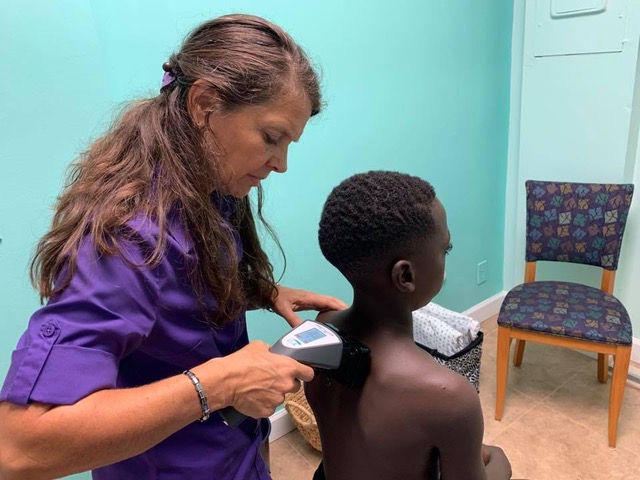
3) Thermal Scanning (Thermography)
Thermal scanning measures temperature patterns along the spine. Temperature is influenced by the autonomic nervous system (the system that regulates things like blood flow, digestion, sleep, immune function, and stress response). Thermal patterns can give insight into:
- Autonomic balance (how evenly the system is regulating).
- Patterns that suggest the body is adapting well—or struggling to adapt.
- Changes over time as the nervous system becomes more regulated.
In everyday terms: thermal scanning helps answer, “Is the nervous system regulating evenly, or are there stress patterns showing up in how the body is adapting?”
Why we use all three together
Each scan is one “window.” Together, they help us:
- Establish a baseline without guessing.
- Build a specific, nervous-system-focused care plan.
- Track progress over time (especially when symptoms fluctuate day to day).
Why we scan (the salutogenic reason)
In a salutogenic model, we don’t begin with “What drug matches this diagnosis?” We begin with:
- What supports health?
- What helps the body regulate and adapt?
- What helps the nervous system communicate clearly with the body?
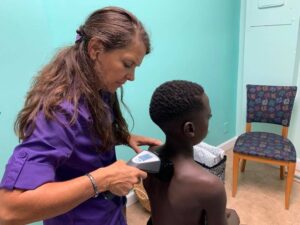
Scanning supports this approach because it gives us feedback. It helps us move beyond opinions and into measurable patterns. It also helps families who have been dismissed. When someone says, “Everything is fine,” but you know your child can’t settle, can’t sleep, or is melting down daily—objective assessment matters.
What the scans do (and do not do)
What scans do:
- Provide objective information about nervous-system stress and regulation patterns.
- Help guide the care plan and recheck progress over time.
- Give families language and clarity for what they’re seeing at home.
What scans do not do:
- Diagnose medical conditions.
- Replace emergency or crisis care when needed.
- Promise a specific outcome on a specific timeline.
How we use the scans in our practice
- Establish a baseline: We start by seeing what patterns are present right now. This gives us a starting point that isn’t based only on symptoms.
- Build a specific care plan: Instead of “one-size-fits-all,” scan findings help guide how we approach care and what we prioritize.
- Track progress over time: This is one of the most important parts. Many families notice improvements in daily life, but scans can also show the nervous system shifting even before the outward symptoms fully change.
That’s especially encouraging when you’re doing the right things and you want confirmation that the body is actually healing.
What changes families often notice as the nervous system regulates
When regulation improves, families commonly report changes like:
- Easier sleep onset and deeper sleep.
- Calmer baseline mood and faster recovery after stress.
- Improved digestion and comfort.
- Improved focus and emotional flexibility.
- Fewer “stuck” patterns (whether physical or behavioral).
Not because we are chasing each symptom but because the nervous system is gaining capacity to adapt and thrive.
A final word for the parent who is tired of guessing
If you’ve been told to “wait it out,” “just medicate it,” or “it’s normal,” but your gut says otherwise—you don’t have to ignore that. Objective measurements don’t replace your instincts; they strengthen them. They give you clarity, direction, and a way to track change as your family moves from survival mode to thriving. If you want to learn what your scans show and what they mean, we’re happy to walk you through them step by step and answer every question you have.